

Doughnut Economics
The model that shapes our regenerative cities discussions (and also makes me hungry)

I’m part of a regular discussion group on regenerative cities—a space where we dive into how we can design cities that don’t just minimise harm but actively restore ecosystems, communities, and economies. It’s a mix of big ideas, practical solutions, and the occasional existential crisis about the future of the planet.
One of the key models we use to shape these discussions? Doughnut Economics.
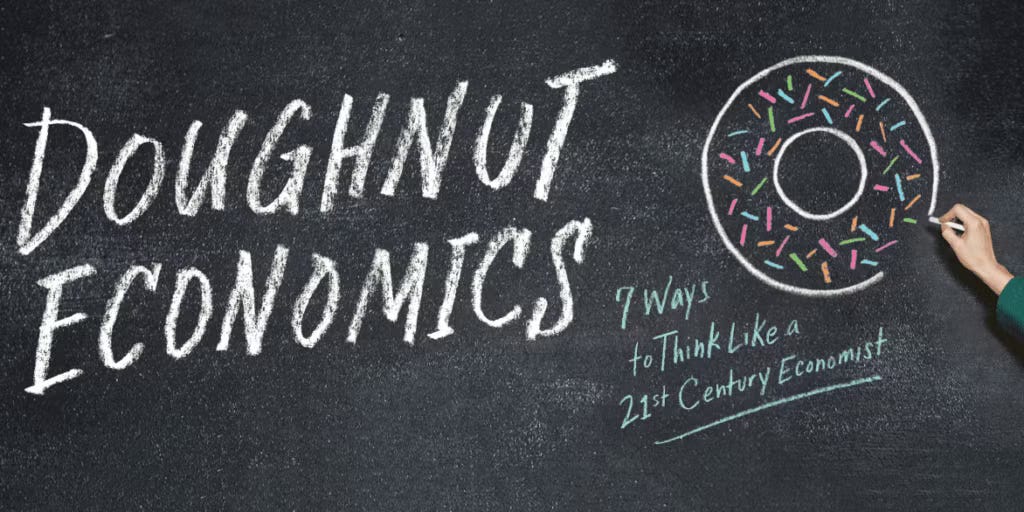
Yes, it sounds delicious. No, it’s not actually about food (sadly). But it is one of the best ways to rethink how we build a fair, sustainable, and thriving society. As you can see below, the model, “cooked up” by economist Kate Raworth, is shaped like, well… a doughnut.
So, what is Doughnut Economics?
The doughnut has two rings:
The Inner Ring (The Social Foundation) – This is the bare minimum people need to live a good life—food, clean water, healthcare, education, a stable climate, political voice, and all the good stuff that keeps societies from collapsing. If people fall inside the doughnut hole (below the social foundation), they’re struggling with poverty, lack of basic services, and an overall bad time.
The Outer Ring (The Ecological Ceiling) – The limits of what our planet can handle before things go off the rails—climate breakdown, biodiversity loss, pollution. Basically, if we overshoot this outer ring, we break the systems that keep us alive and end up in environmental disaster territory (which, news flash, we are already dabbling in).
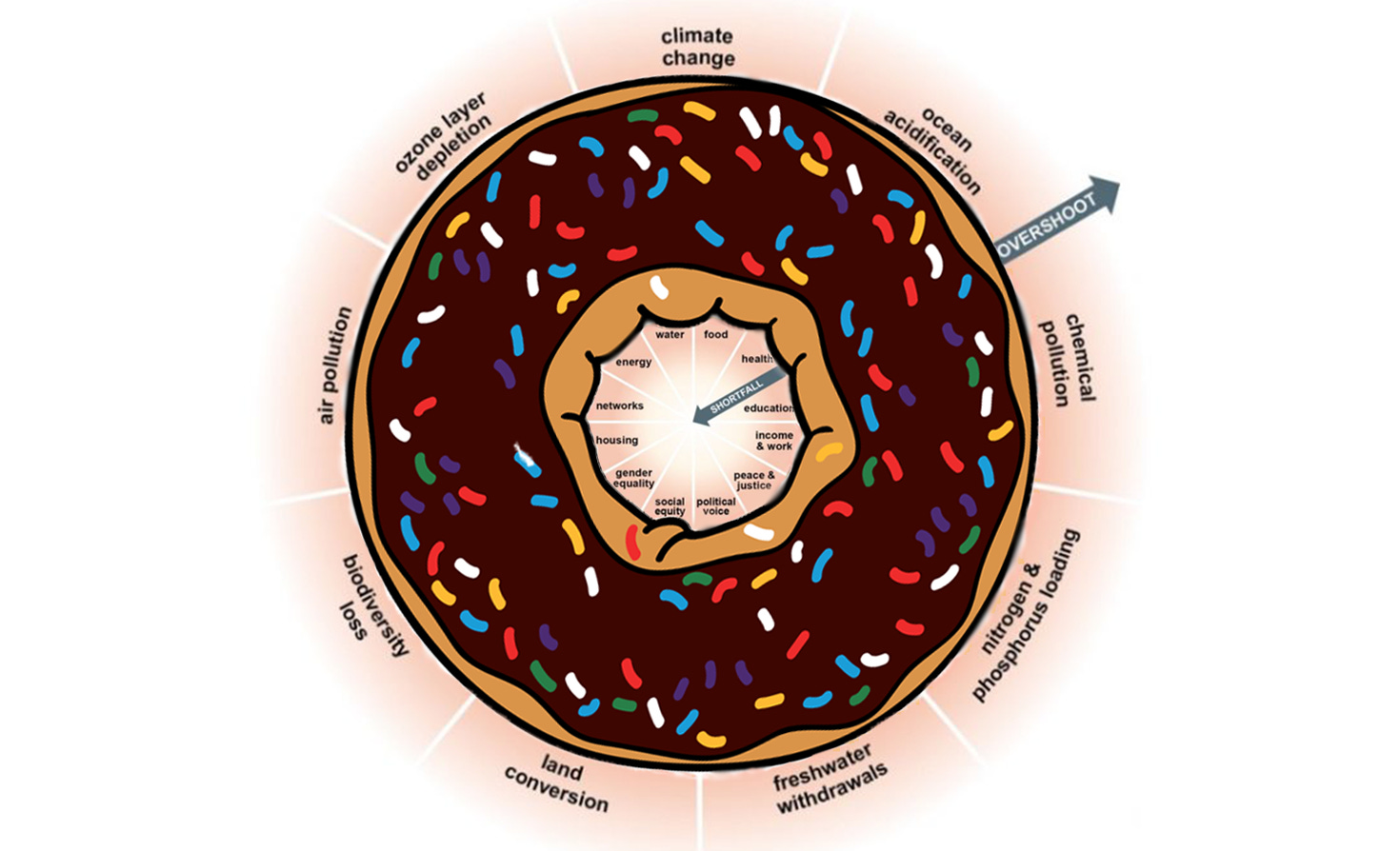
Between these two rings? That’s the doughnut zone— the sweet spot where everyone has what they need to live well, without wrecking the planet in the process.
We need to stay in the doughy goodness. Kate Raworth explains why in one and a half minutes in this video.
Why Doughnut Economics is a big deal (and why we’re not there yet)
Traditional economics tends to obsess about growth—the idea that a “good” economy is one that just keeps getting bigger and bigger, like some kind of unsupervised sourdough starter. But Doughnut Economics flips that idea on its head and asks:
What if success wasn’t about getting richer, but about staying within the doughnut and thriving within our planetary limits?
Right now, we’re failing at both ends:
Billions of people still don’t have access to the basics (healthcare, clean water, decent wages).
The planet is taking a serious hit from our economic system (hello, climate crisis).
Doughnut Economics is about designing economies that meet human needs without breaking planetary boundaries. It’s about shifting from “always more” to thriving in balance. This six-minute video explains more.
Why this model is so useful for regenerative cities
When we talk about solutions for cities, Doughnut Economics helps us focus on what actually matters:
How do we make sure people have housing, transport, and access to nature without endless urban sprawl?
How do we ensure people aren’t left behind while a handful hoard all the “dough” (yes, I am looking at you Gina and Clive).
How do we create circular systems that regenerate rather than deplete (water, waste, materials)?
How do we shift from extractive industries to economies that give back to communities and ecosystems?
How do we balance innovation and sustainability without leaving anyone behind?
Cities like Amsterdam are already using this model to guide policies on housing, mobility, and social equity—proving it’s not just a nice idea, but something we can apply in the real world.
Time to stay in the doughnut
Doughnut Economics isn’t about scrapping capitalism overnight or forcing everyone to live in yurts (though, if that’s your thing, go for it). It’s about recognising that a good economy is one that keeps both people and the planet in balance.
The challenge? We need to redesign our systems to make that balance possible. And that starts with shifting the way we think about success—from “more is better” to “thriving in the doughnut”. Mmmmm, Doughnut!
Where do we go from here?
Every time our group meets, Doughnut Economics helps us ask better questions and rethink assumptions about progress. It reminds us that thriving cities aren’t just about more buildings, more GDP, more “growth”—they’re about ensuring people and nature can flourish together.
So next time you hear an economic debate that sounds like “just grow the economy and it’ll all work out,” ask yourself—are we even aiming for the right target? Or are we just stuck in an outdated mindset that’s pushing us outside the doughnut?
Now, if you’ll excuse me, all this talk of doughnuts has made me really hungry.